
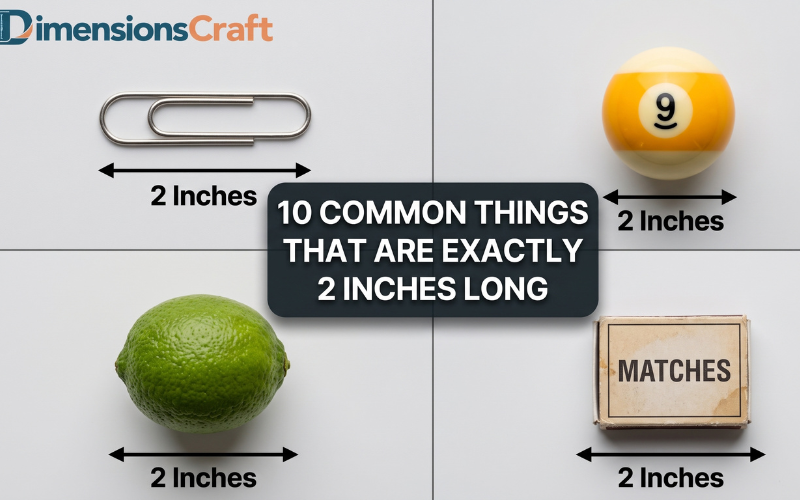
Two inches may sound like a very small measurement, but it is surprisingly useful in everyday life. Whether you are checking the size of a small household item, measuring a craft project, estimating the width of an object, or trying to understand a product’s dimensions before buying it, knowing what 2 inches looks like can make things much easier.
The good news is that you do not always need a ruler to visualize this length. Several familiar objects can help you develop a better sense of how long 2 inches really is. You can also use simple comparisons, unit conversions, and everyday measurements to estimate the distance when a measuring tool is not available.
In this guide, we will explain exactly how long 2 inches is and explore 10 practical objects that can help you picture this measurement. Each example focuses on a specific dimension, such as length, width, diameter, or height, so you can understand how the measurement applies in real situations.
How Long Is 2 Inches?
Two inches is equal to 5.08 centimeters, 50.8 millimeters, or 0.167 feet. In everyday terms, it is a short distance that can fit comfortably across the palm of many adults, although hand sizes vary.
An inch is a standard unit of length used in the United States and several other countries. Two inches represents twice that distance, making it a useful measurement for small accessories, craft materials, hardware, and compact household objects.
What Does 2 Inches Look Like?
Imagine a line that begins at zero and ends at the 2-inch mark on a ruler. That line measures exactly 2 inches, or 5.08 centimeters. It is shorter than the width of many smartphones and far smaller than a standard sheet of paper, but it is large enough to notice clearly on small objects.
You can picture this length in several ways:
- A little over 5 centimeters on a metric ruler.
- A short section of a pencil or wooden stick.
- The diameter of a small round accessory.
- The width of a compact craft material.
- A short gap between two marks on a measuring tape.
The important thing is to identify which part of an object measures 2 inches. An item can be 2 inches wide without being 2 inches long. Similarly, the diameter of a round object is different from its circumference, which measures the distance around its outer edge.
This distinction becomes especially important when comparing products or following craft instructions.
Quick Comparison Chart:
| No. | Common Object | Measurement to Compare | Approximate or Exact Size |
| 1 | Standard Large Paper Clip | Overall length | Approximately 1.25–2 inches, depending on the model |
| 2 | Wooden Craft Strip | End-to-end length | Exactly 2 inches when cut to size |
| 3 | Small Round Craft Button | Diameter | Some larger buttons are close to 2 inches |
| 4 | Adhesive Label | Side length or diameter | Available in 2-inch sizes |
| 5 | Craft Foam Square | Length and width | Exactly 2 inches per side when cut to size |
| 6 | Wooden Drawer Knob | Face diameter | Some compact designs are close to 2 inches |
| 7 | Ribbon Strip | End-to-end length | Exactly 2 inches when cut to size |
| 8 | Ceramic Tile Sample | Side length | Some specialty tiles measure 2 inches per side |
| 9 | Cardboard Piece | End-to-end length | Exactly 2 inches when cut to size |
| 10 | Small Round Decorative Mirror | Glass diameter | Some miniature mirrors are close to 2 inches |
The most reliable examples in this list are the materials you can cut or measure yourself, such as ribbon, cardboard, wooden strips, and craft foam. Manufactured products are useful for visualization, but their dimensions can differ by brand and model.
2 Inches Conversion Chart
Two inches can be expressed in several measurement units. The following chart makes it easier to compare the imperial and metric systems.
| Measurement Unit | Equivalent to 2 Inches |
| Inches | 2 inches |
| Centimeters | 5.08 cm |
| Millimeters | 50.8 mm |
| Feet | 0.167 ft |
| Yards | 0.0556 yd |
| Meters | 0.0508 m |
If you use the metric system, remembering that 2 inches is just over 5 centimeters is one of the easiest ways to visualize the length. For quick estimates, you can think of it as approximately 5 cm, but use 5.08 cm when accuracy matters.
10 Common Things That Are About 2 Inches Long
The following objects provide practical ways to visualize a 2-inch measurement. Some are commonly available in sizes close to 2 inches, while others can be measured or cut to this exact length.
Keep in mind that everyday products are not manufactured in one universal size. Always check the specific item’s dimensions if you need an exact measurement.
10 Objects at a Glance
| No. | Object | Dimension | Size Reference |
| 1 | A Standard Large Paper Clip | Overall length | Around 1.25–2 inches |
| 2 | A Two-Inch Wooden Craft Strip | Length | Exactly 2 inches when cut |
| 3 | A Small Round Craft Button | Diameter | Some are close to 2 inches |
| 4 | A Two-Inch Adhesive Label | Side length or diameter | Available in 2-inch sizes |
| 5 | A Small Craft Foam Square | Length and width | 2 inches per side when cut |
| 6 | A Small Wooden Drawer Knob | Face diameter | Some are close to 2 inches |
| 7 | A Two-Inch Strip of Ribbon | Length | Exactly 2 inches when cut |
| 8 | A Small Rectangular Ceramic Tile Sample | Side length | Some measure 2 inches |
| 9 | A Two-Inch Piece of Cardboard | Length | Exactly 2 inches when cut |
| 10 | A Small Round Decorative Mirror | Glass diameter | Some are close to 2 inches |
1. A Standard Large Paper Clip
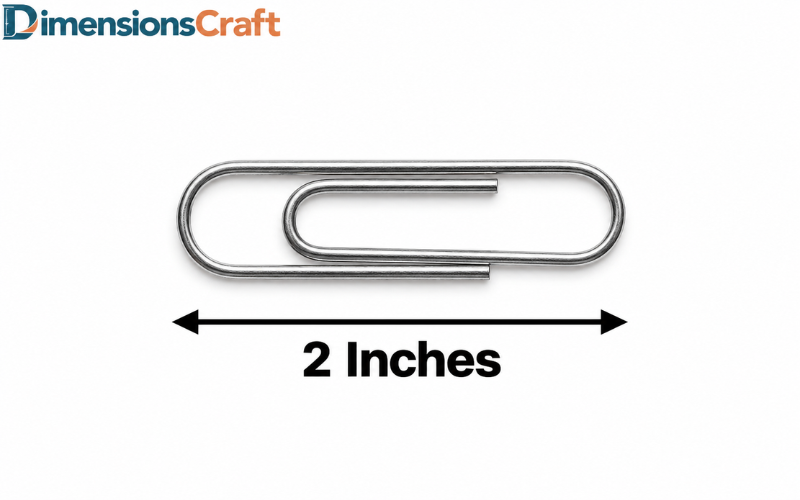
A large paper clip is a useful reference for understanding short measurements. Many standard large paper clips measure approximately 1.25 to 2 inches in overall length, depending on their design and manufacturer.
A paper clip close to 2 inches long gives you a simple visual reference because its narrow wire forms a clearly defined outline. Place it on a flat surface and compare its longest dimension with a ruler to see how close it is to the 2-inch mark.
Paper clips are especially convenient because they are common in offices, schools, and home workspaces. You may already have several in a drawer, making them easy to use when you need a quick estimate.
How to use it as a reference: Choose a large paper clip, measure its longest dimension, and use it as a rough guide only if it is close to 2 inches. Do not assume every paper clip has the same length.
2. A Two-Inch Wooden Craft Strip
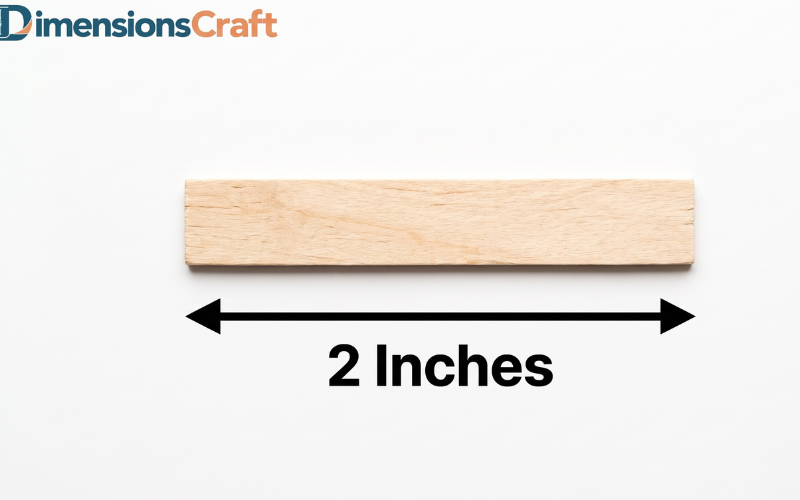
A short wooden craft strip cut to exactly 2 inches is one of the most reliable examples because its dimensions can be controlled directly.
Craft sticks, thin wooden offcuts, and model-making materials can all be cut into small sections for miniature projects. A piece measuring 2 inches from end to end is exactly 5.08 centimeters long, regardless of its width or thickness.
For example, a hobbyist might use a 2-inch wooden strip to create a small support, decorate a miniature structure, or mark a particular distance on a model. The strip could be a quarter-inch wide, half an inch wide, or another dimension while still measuring 2 inches in length.
This example also demonstrates why length and width should not be confused. A wooden strip measuring 2 inches long might be much narrower than 2 inches across.
How to visualize it: Picture a straight wooden piece beginning at the zero mark and ending at the 2-inch line on a ruler. That is the full length you are trying to estimate.
3. A Small Round Craft Button
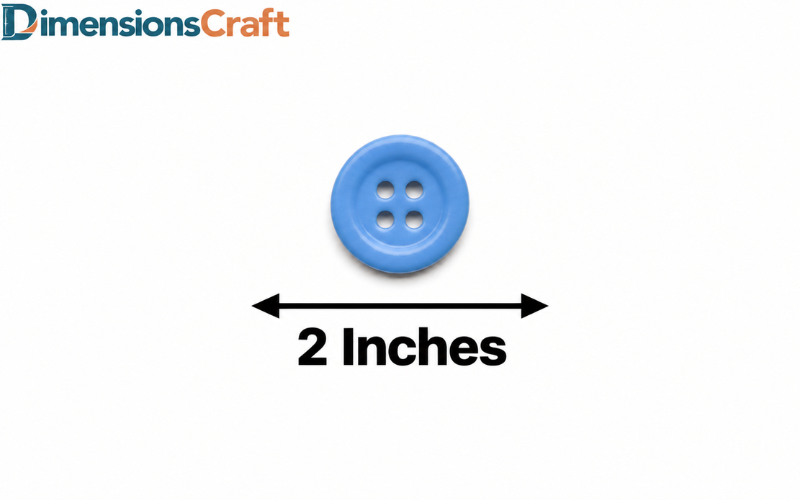
Some larger craft buttons have diameters close to 2 inches. These buttons are noticeably bigger than the small buttons commonly used on shirts, making them suitable for decorative sewing, fabric crafts, and handmade accessories.
A round button that measures 2 inches across has a diameter of 2 inches, meaning the distance from one side of the button to the opposite side through its center is 2 inches.
Its circumference, however, is greater than 2 inches. This matters because measuring around the edge will produce a different result from measuring straight across the middle.
Large buttons can be made from plastic, wood, metal, or other materials. Their sizes vary considerably, so a button should be treated as a reference only after its diameter has been checked.
How to use it as a reference: Place a round button on a flat surface and measure straight across its widest point. If the diameter is 2 inches, it provides an accurate visual example of the measurement.
4. A Two-Inch Adhesive Label
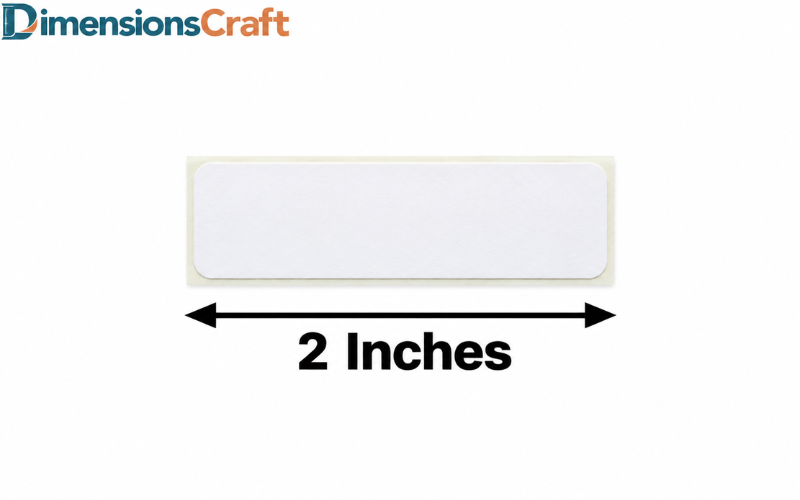
Small adhesive labels are another practical way to picture a 2-inch measurement. Square labels measuring 2 by 2 inches are used for organizing containers, labeling craft supplies, decorating packages, and marking storage boxes.
A 2-inch square label measures 2 inches along each side. Its diagonal is longer than 2 inches, so it is important to distinguish the side measurement from the corner-to-corner distance.
For example, a square label measuring 2 inches on each side has a diagonal of approximately 2.83 inches. Although the label may look small, the difference between its side and diagonal can be significant when fitting it into a design.
Round and rectangular labels are also available in different sizes. A round label with a 2-inch diameter has a different shape from a square label with 2-inch sides, even though both can help demonstrate the measurement.
How to visualize it: Imagine a small square sticker with each edge measuring 2 inches. The full width and height are both 2 inches.
5. A Small Craft Foam Square
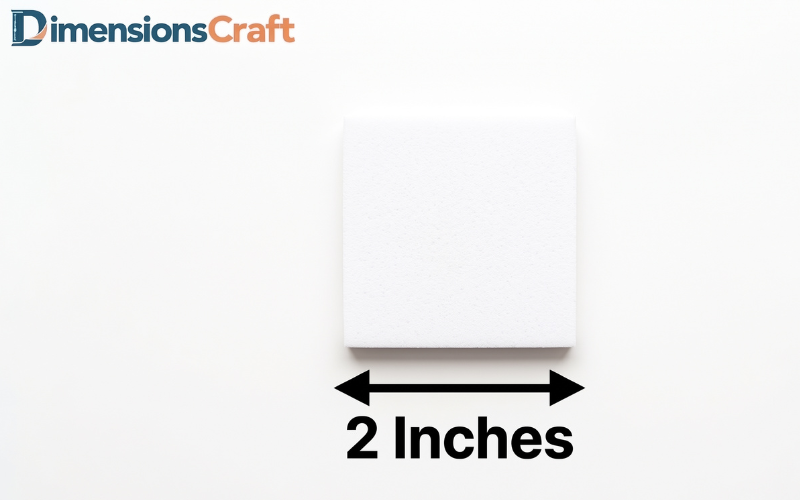
Craft foam is widely used in school projects, handmade decorations, model building, and creative activities. A square cut from a larger sheet can be made to measure exactly 2 inches on each side.
This makes a 2-inch craft foam square a particularly useful example because it is easy to measure and reproduce. Unlike manufactured items that vary between brands, a foam square can be cut to the required dimensions with a ruler and scissors suitable for the material.
A 2-by-2-inch square has an area of 4 square inches. This is different from its length, which remains 2 inches along each side.
The foam’s thickness is another separate measurement. A square could be 2 inches wide and 2 inches long while being only a few millimeters thick.
Craft foam can be useful when creating small decorations, assembling miniature objects, or planning the dimensions of a larger craft layout.
How to use it as a reference: Cut a square with 2-inch sides or select a pre-cut piece with verified dimensions. Compare the edges with a ruler to develop a clear sense of the length.
6. A Small Wooden Drawer Knob
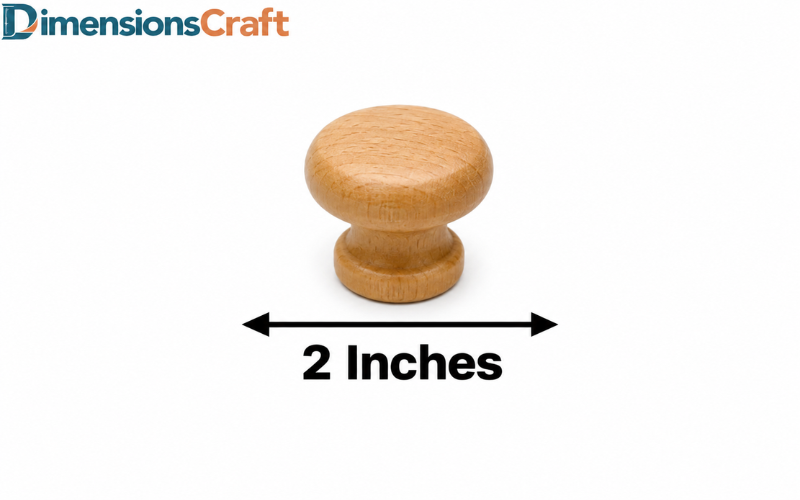
Some compact wooden drawer knobs have a face or base measuring approximately 2 inches across. These knobs are used on cabinets, dressers, storage units, and furniture projects.
The exact measurement depends on the knob’s design. A round knob might have a 2-inch face diameter, while its total height or projection from the drawer could be smaller or larger.
For measurement purposes, it is important to decide which dimension you mean. If you are comparing the knob’s width with 2 inches, measure the widest part of its face. If you are checking how far it projects from a cabinet, measure from the mounting surface to the outermost point.
Wooden knobs can have circular, oval, square, or decorative shapes. A circular model is especially easy to compare because its diameter gives you a single straight measurement across the center.
How to visualize it: Think of a compact round furniture knob whose face is approximately 2 inches from one outer edge to the other. Check the product specifications before using one as an exact reference.
7. A Two-Inch Strip of Ribbon
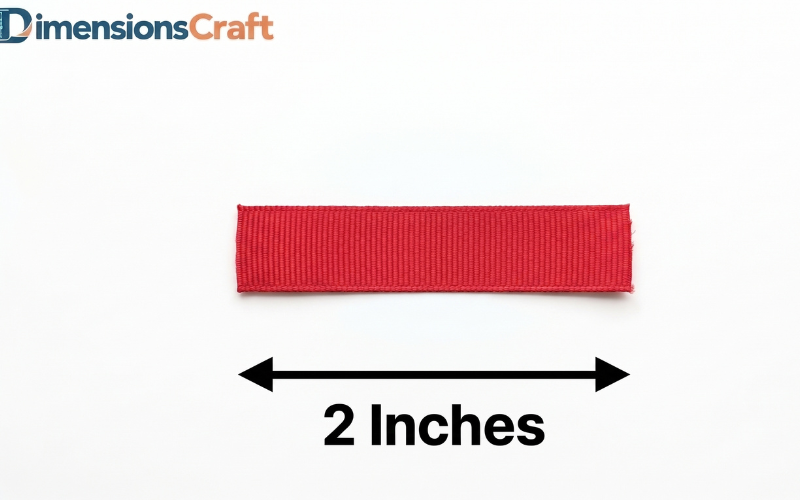
Ribbon is commonly used for gift wrapping, sewing, scrapbooking, party decorations, and handmade accessories. Because it is flexible, it can be cut to almost any length, including exactly 2 inches.
A short ribbon segment measuring 2 inches from end to end provides a clear example of the measurement. Its width can vary independently: a narrow ribbon and a wide ribbon can both have a length of 2 inches.
For example, you might cut a 2-inch piece of ribbon to create a small decorative loop, attach it to a gift tag, or test a color combination in a craft project. In these cases, the length of the piece matters more than its width.
Ribbon is also useful for showing the difference between a straight measurement and a curved one. If the ribbon is bent into a loop, the distance from one visible end to the other may no longer represent its full length.
How to use it as a reference: Lay a ribbon flat without stretching or folding it, then measure 2 inches along its length. The resulting segment is a simple and accurate example.
8. A Small Rectangular Ceramic Tile Sample
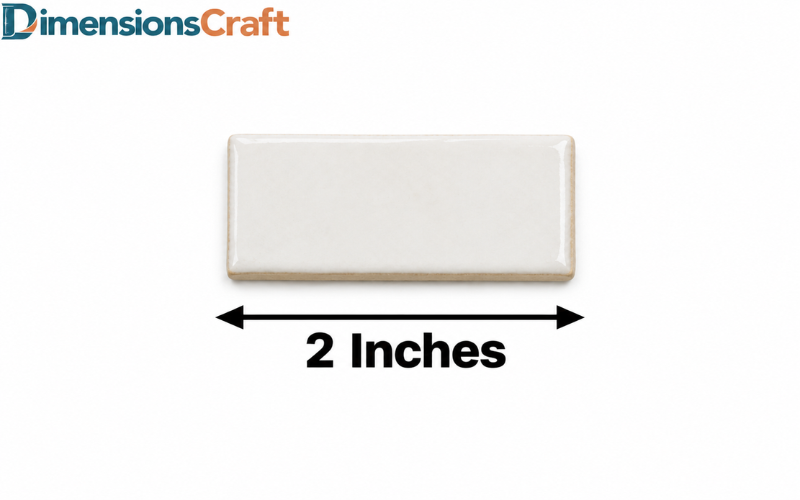
Small ceramic tile samples can provide another visual comparison, particularly when working on home improvement or decorative projects. Some mosaic tiles and specialty tile pieces have dimensions close to 2 inches, although many common tiles are available in larger or smaller sizes.
A square tile measuring 2 by 2 inches has a side length of exactly 2 inches. A rectangular tile measuring 2 by 1 inches also has one dimension equal to 2 inches, even though its overall shape is different.
Tile measurements are especially important when planning a backsplash, creating a mosaic, or calculating how many pieces fit into a specific space. Grout lines and spacing between tiles must also be considered when estimating the total area covered.
Because tile sizes vary by product, a tile should only be treated as an exact 2-inch reference when its stated or measured dimensions confirm that size.
How to visualize it: Picture a small square tile that measures 2 inches from left to right and 2 inches from top to bottom.
9. A Two-Inch Piece of Cardboard
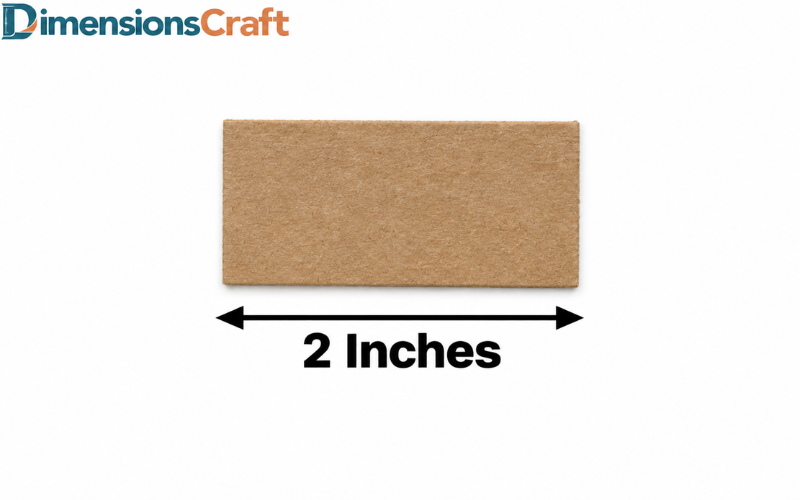
Cardboard is one of the easiest materials to cut into a specific size. A strip measuring 2 inches in length can be used in packaging, school projects, handmade organizers, model construction, and simple measuring demonstrations.
The cardboard can be thin, like a cereal box, or thicker, like corrugated shipping material. Its thickness does not change the 2-inch length, although it may affect how the piece fits into a particular space.
For example, a 2-inch cardboard strip could serve as a small spacer when arranging objects in a craft project. Several strips can also be placed side by side to demonstrate how short lengths combine into a longer distance.
Two pieces measuring 2 inches each produce a combined length of 4 inches when placed end to end without overlapping. Five such pieces would create a total length of 10 inches.
How to use it as a reference: Mark two points exactly 2 inches apart on a flat piece of cardboard, then cut along the marked line. You will have a reusable measurement sample.
10. A Small Round Decorative Mirror
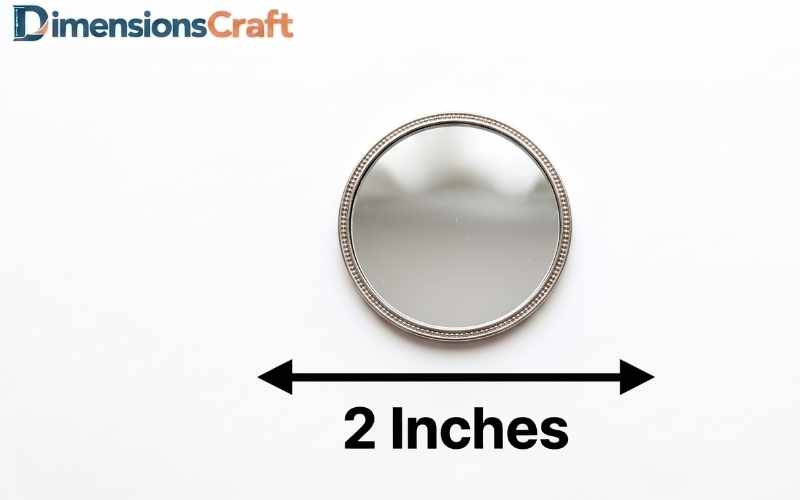
Compact decorative mirrors are available in many shapes and sizes. Some miniature mirrors used in crafts, jewelry displays, dollhouse accessories, or decorative arrangements measure approximately 2 inches in diameter.
For a round mirror, the diameter is the straight-line distance from one side to the opposite side through the center. This is the dimension to check if you want to compare the mirror with a 2-inch measurement.
The reflective surface may appear larger or smaller depending on its frame. A mirror with a 2-inch glass surface could have an overall diameter greater than 2 inches if it includes a surrounding border.
This is a useful distinction when buying craft mirrors or planning a design. The visible glass, the outer frame, and the total thickness are three separate dimensions.
How to visualize it: Picture a small circular mirror with a reflective surface measuring 2 inches across. If the frame extends beyond the glass, measure the glass and frame separately.
How to Measure 2 Inches Without a Ruler
If you do not have a ruler nearby, you can still estimate a 2-inch distance using a few simple methods. These techniques are useful for rough comparisons, but they should not replace precise measurement when accuracy is important.
Use a Metric Measurement You Know
Since 2 inches equals 5.08 centimeters, a metric ruler can measure the same distance easily. Locate the 5-centimeter mark, then add 0.8 centimeters to reach the exact equivalent.
If you only need a rough estimate, 5 centimeters is close enough for many everyday comparisons. For cutting materials, fitting components, or following technical instructions, use the full 5.08-centimeter conversion.
Make a Reusable Cardboard Template
Cut a small piece of cardboard to a verified length of 2 inches. Keep it in a desk drawer or craft box so you can use it later as a quick reference.
To create the template accurately, measure the distance with a ruler before cutting. Mark the starting and ending points, draw a straight line, and cut carefully along that line.
You can then compare other small objects against the template without measuring each one from scratch.
Use a Digital Screen Carefully
Some people try to estimate inches using a phone or computer screen. This can be misleading because screen sizes, pixel densities, zoom levels, and display settings vary.
A line that appears 2 inches long on one device may appear larger or smaller on another. If you want to use a digital image as a measuring aid, calibrate it against a physical ruler displayed at the same scale.
For most situations, a physical ruler or a verified cardboard template is simpler and more dependable.
Compare Against a Measured Object
If you have a known 2-inch object, place the item you want to estimate beside it. Align one end of both objects and compare their other ends.
This works best when the objects are straight and placed on the same flat surface. If one object is curved, angled, or irregularly shaped, the comparison may be less accurate.
Why Two Inches Can Look Different on Different Objects
Although 2 inches always represents the same distance, it can look different depending on an object’s shape, orientation, and overall size.
Length versus width: A strip measuring 2 inches long may be very narrow, while a square measuring 2 inches on each side covers a wider area.
Diameter versus circumference: A circular button with a diameter of 2 inches measures 2 inches straight across its center. The distance around its edge is much longer.
Thickness versus height: A block may measure 2 inches tall but only half an inch wide. The same numerical measurement describes different directions.
Perspective and viewing angle: An object viewed at an angle may appear shorter than it really is. For a fair visual comparison, place it flat and view it from directly above.
Manufacturing differences: Items sold under the same general product name may have different dimensions. A large button, craft tile, or decorative mirror should not automatically be assumed to measure exactly 2 inches.
Understanding these differences helps you interpret product descriptions and avoid confusing one dimension with another.
FAQS
How long is 2 inches in centimeters?
Two inches equals exactly 5.08 centimeters. For a quick mental estimate, you can round this to approximately 5 centimeters, but use 5.08 centimeters for precise measurements.
Is 2 inches the same as 5 centimeters?
Not exactly. Five centimeters equals approximately 1.97 inches, while 2 inches equals 5.08 centimeters. The difference is small, but it can matter in projects that require accurate dimensions.
What common object is exactly 2 inches long?
There is no single everyday object that is always exactly 2 inches long. A piece of cardboard, ribbon, wooden craft material, or craft foam can be cut to this length. Some manufactured objects may also measure 2 inches, but their dimensions should be checked.
How can I visualize 2 inches without a ruler?
Think of a distance slightly greater than 5 centimeters. You can also use a cardboard template that has been measured to exactly 2 inches or compare an object with a verified 2-inch craft strip.
Is 2 inches considered a small measurement?
Yes, in most everyday contexts, 2 inches is a relatively short distance. However, it can be a significant dimension for small accessories, craft materials, hardware, and compact components.
How many millimeters are in 2 inches?
Two inches equals 50.8 millimeters. Since 1 inch equals 25.4 millimeters, multiplying 25.4 by 2 gives 50.8 millimeters.
Is the diameter of a 2-inch circle equal to 2 inches?
Yes. If a circle has a diameter of 2 inches, the straight-line distance through its center from one edge to the opposite edge is 2 inches. Its circumference, or distance around the circle, is approximately 6.28 inches.
Can I use my hand to estimate 2 inches?
You can use your hand for a rough estimate, but hand dimensions vary from person to person. If you need a reliable measurement for cutting, building, or fitting an object, use a ruler or a verified template instead.
Conclusion
Two inches equals 5.08 centimeters, making it a short but useful measurement for everyday tasks. From a piece of ribbon or cardboard to a wooden craft strip or small square of foam, many objects can help you visualize this length.
The best approach is to focus on the specific dimension you need. A button may be measured by its diameter, a strip by its length, and a tile by the length of one side. These are not interchangeable measurements, even when each involves the number 2.
If you need an exact 2-inch reference, create a small template using a ruler and keep it available for future projects. Once you become familiar with the distance, estimating small measurements becomes easier, faster, and more practical.
1 thought on “10 Common Things That Are Exactly 2 Inches Long”