
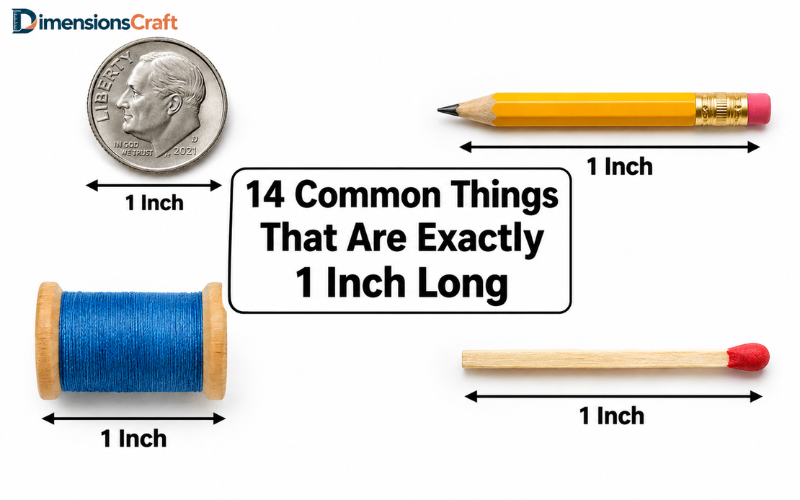
Have you ever needed to measure something small but could not find a ruler? Knowing what 1 inch looks like can help you estimate the size of everyday objects, complete craft projects, check small measurements, and understand product dimensions. Although one inch is a short distance, it is a useful measurement that appears in many things around us.
One inch is equal to 2.54 centimeters, or 25.4 millimeters. It may look small on a ruler, but you can understand it more easily by comparing it with familiar objects, such as a small paperclip, a button, a coin, or a one-inch craft cube. Some objects are close to one inch, while others are manufactured in an exact one-inch size.
In this guide, you will learn how long 1 inch is, explore its conversions, compare it with everyday measurements, and discover 14 common objects that can help you visualize this short length. You will also learn how to estimate one inch without a ruler and avoid common measurement mistakes.
What Does 1 Inch Look Like?
One inch is a short distance that you can picture as the width of a small button or the length of a short paperclip, depending on the item’s design. Another simple way to imagine it is to look at the space between two neighboring inch marks on a ruler.
One inch is also equal to 2.54 centimeters. If you have a metric ruler, find the zero mark and measure 2.54 centimeters along the scale. That distance represents exactly one inch.
The important thing to remember is that objects vary in size. A small button might be one inch wide, while another button may be much smaller or larger. Use these objects as visual references, and check their actual dimensions when you need an accurate measurement.
How Long Is 1 Inch?
One inch is exactly 2.54 centimeters or 25.4 millimeters. It is also equal to one-twelfth of a foot. Although an inch is a small unit of length, it is commonly used to measure objects, screens, tools, furniture parts, and materials.
To measure one inch with a ruler, place the starting point at zero and find the first full-inch mark. The distance between those marks is one inch. Do not confuse the number of lines with the spaces between them: a ruler may have several smaller divisions within an inch, but the full inch is measured from one inch mark to the next.
Here are a few useful comparisons:
- 1 inch is equal to 2.54 centimeters.
- 1 inch is equal to 25.4 millimeters.
- 1 inch is equal to one-twelfth of a foot.
- 1 inch is equal to approximately 0.0833 feet.
- 1 inch is equal to 0.0254 meters.
Understanding these conversions makes it easier to follow instructions that use either the imperial or metric system.
1 Inch Conversion Chart
Use this conversion chart to see how one inch compares with other units of measurement.
| Measurement Unit | Equivalent to 1 Inch |
| Inches | 1 inch |
| Centimeters | 2.54 cm |
| Millimeters | 25.4 mm |
| Feet | 0.0833 ft |
| Yards | 0.0278 yd |
| Meters | 0.0254 m |
| Kilometers | 0.0000254 km |
| Miles | Approximately 0.0000158 mi |
The most useful conversions for everyday tasks are inches to centimeters and inches to millimeters. For example, if a product is listed as 2.54 centimeters wide, it measures exactly one inch. If a small component measures 25.4 millimeters across, that is also one inch.
Quick Comparison Chart: 1 Inch
The following table compares one inch with familiar objects and measurements. Some examples are exact by definition, while others are close estimates.
| Object or Measurement | Approximate Size | Comparison with 1 Inch |
| One-inch ruler section | 1 inch | Exactly 1 inch |
| US quarter coin diameter | 0.955 inch | Slightly smaller |
| US nickel coin diameter | 0.835 inch | Smaller |
| US penny diameter | 0.750 inch | Smaller |
| US dime diameter | 0.705 inch | Smaller |
| 2.54 centimeters | 1 inch | Exactly 1 inch |
| 25.4 millimeters | 1 inch | Exactly 1 inch |
| One-inch craft cube edge | 1 inch | Exactly 1 inch |
A US quarter is a useful everyday reference because its diameter is close to one inch. However, it is not exactly one inch wide. Coins are manufactured to specific dimensions, so they should be treated as approximate references rather than exact measuring tools.
14 Common Things That Are 1 Inch Long
Many small objects can help you visualize one inch. Some have a dimension close to one inch, while others are sold in sizes that are specifically one inch. The following examples explain which part of each object to measure and how it compares with the one-inch mark.
| No. | Common Object | Measurement to Check |
| 1 | Small Paperclip | Overall length of a small model |
| 2 | US Quarter Coin | Diameter, approximately 0.955 inch |
| 3 | One-Inch Craft Cube | Length of one side |
| 4 | Small Button | Diameter of a one-inch button |
| 5 | One-Inch Binder Clip | Width of the clip |
| 6 | One-Inch Wooden Block | Length of one side |
| 7 | One-Inch Square Craft Foam | Length of one side |
| 8 | One-Inch Adhesive Label | Width or side length |
| 9 | One-Inch Ribbon | Width of the ribbon |
| 10 | Short Pencil Section | A marked one-inch piece |
| 11 | One-Inch Paper Strip | Length of the strip |
| 12 | One-Inch Washer | Outside diameter of a specified size |
| 13 | One-Inch Craft Tile | Length of one side |
| 14 | One-Inch Plastic Cube | Length of one side |
1. Small Paperclip
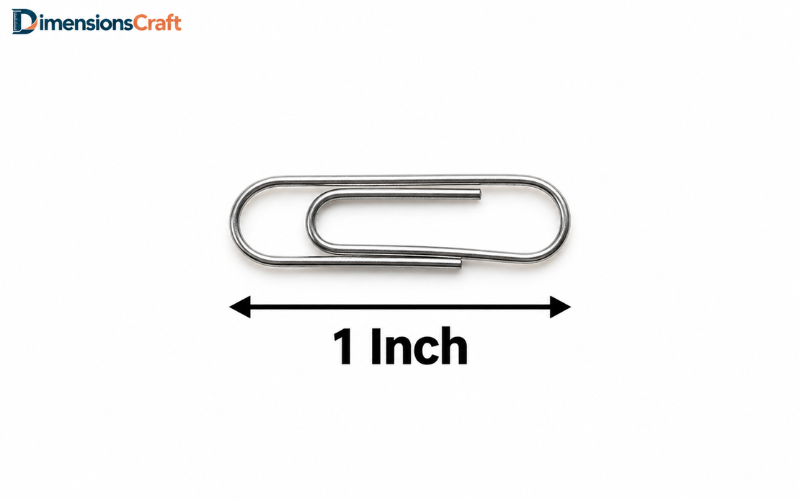
A small paperclip can be a helpful visual reference for one inch, depending on its design and size. Paperclips are used to hold sheets of paper together without staples, making them common in offices, schools, and homes. However, paperclips come in several lengths, and many standard models are longer than one inch.
For this example, look for a small paperclip with an overall length close to one inch. Place it beside a ruler and measure from its outermost end to the opposite end. If it reaches the one-inch mark, it is a suitable reference for this measurement.
The wire bends around itself, so be careful not to measure along the curved wire. The relevant dimension is the straight-line distance from one end of the paperclip to the other.
A small paperclip can help you estimate a short distance when a ruler is not available. Still, it is best to check its size first. Do not assume every paperclip is one inch long, because larger paperclips can be substantially longer.
2. US Quarter Coin
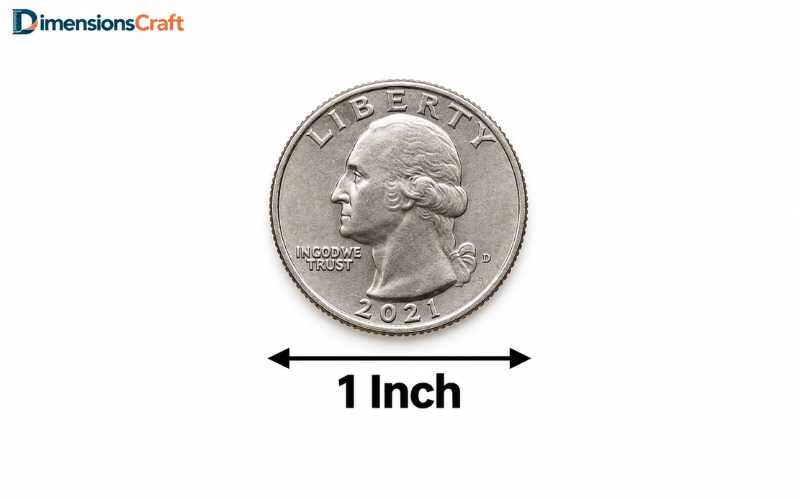
A US quarter coin is a familiar object that comes close to one inch in diameter. A modern US quarter measures approximately 0.955 inches across, which is just a little smaller than a full inch. Its diameter is about 2.43 centimeters.
To compare it with one inch, imagine placing the coin beside a ruler. Its width will fall slightly short of the one-inch mark. The difference is small, which makes the coin a convenient rough reference, but it is important to remember that the quarter is not exactly one inch wide.
Coins are designed to have consistent dimensions, so a quarter can be more reliable than an object whose size varies considerably. However, it should not replace a proper measuring tool when precision matters.
The quarter is especially useful for understanding how small one inch is. If you picture the coin’s diameter and add a tiny amount of extra distance, you have a reasonable mental image of one inch. This comparison is helpful when estimating the size of small objects or understanding measurements in product descriptions.
3. One-Inch Craft Cube
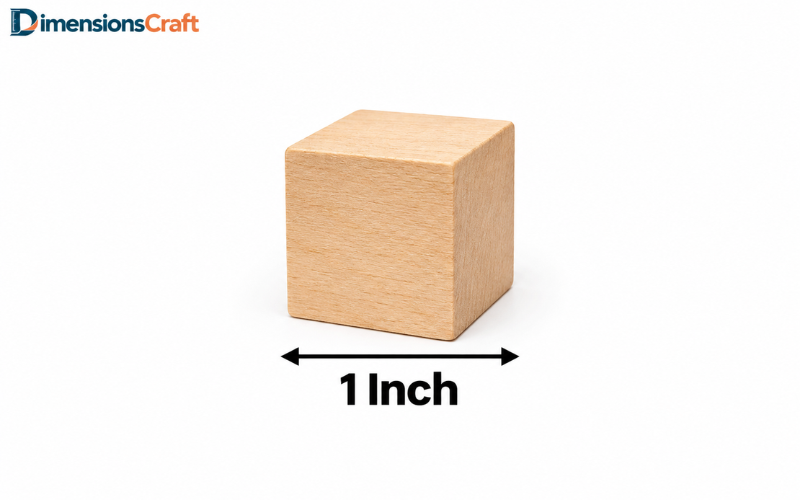
A one-inch craft cube is one of the clearest examples of this measurement. Craft cubes are available in wood, foam, and plastic and are used for school activities, decorations, model-making, counting exercises, and do-it-yourself projects.
When a cube is specified as one inch in size, each of its sides measures one inch. That means its length, width, and height are each 2.54 centimeters. The diagonal running through the cube is longer than one inch, so measure along an edge when checking its dimensions.
A cube is particularly useful because it provides several straight edges that can be compared with a ruler. You can place one edge alongside the ruler and see how it reaches from zero to one inch. Its solid shape also helps you visualize a short length in three dimensions.
If you are using craft cubes for a project, check the product listing because some cubes are sold in different sizes. A cube described as one inch should have one-inch edges, although small manufacturing variations may occur.
4. Small Button
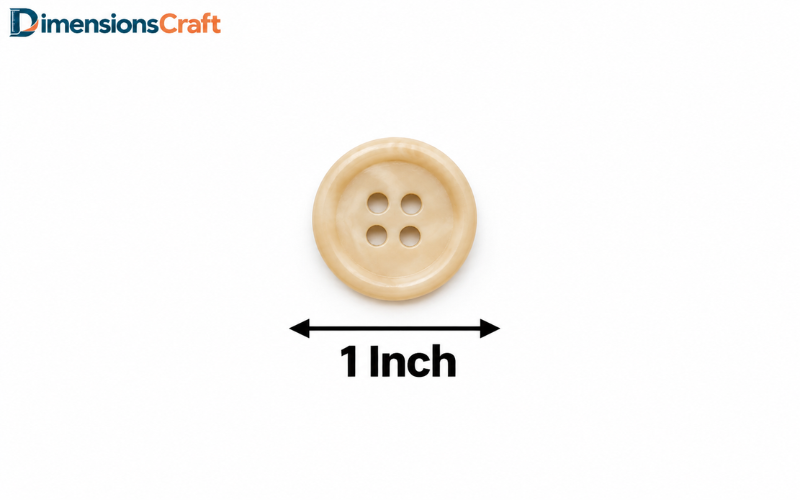
A button with a diameter of one inch can help you picture this measurement. Buttons are used on shirts, coats, bags, uniforms, and craft projects. They are made from materials such as plastic, wood, metal, and shell, and their sizes vary according to their intended use.
For this example, choose a button specifically listed as one inch in diameter. Measure straight across the widest part of the button, passing through its center. The measurement should be 2.54 centimeters.
The diameter is different from the distance around the button’s edge. It is also different from the thickness of the button, which is usually much smaller. If the button is round, measuring across its center gives you a simple way to compare it with the one-inch mark on a ruler.
A one-inch button may be larger than the buttons found on many everyday shirts, but it can be useful for coats, decorative garments, bags, and crafts. Check the stated diameter when buying buttons for sewing because the size can affect both the appearance and fit of the finished item.
5. One-Inch Binder Clip
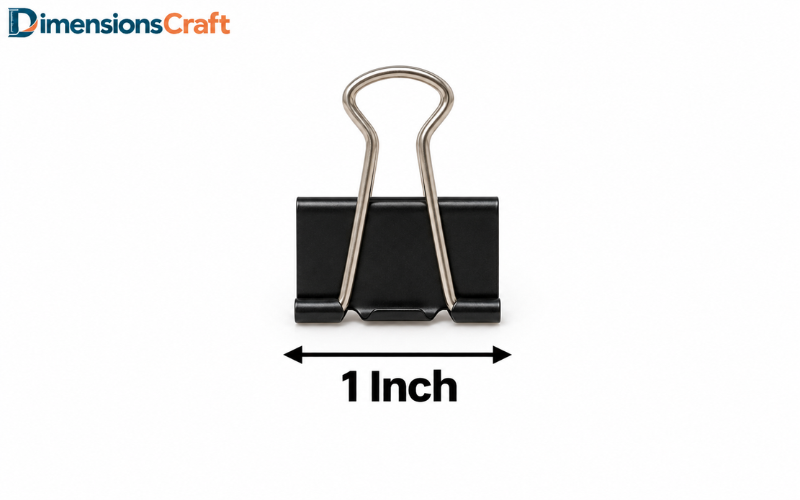
A small binder clip specified as one inch wide can be a practical example of this measurement. Binder clips are commonly used to hold stacks of paper together in offices, classrooms, and home workspaces. They have two metal handles that help open the spring-loaded clip.
For this example, the one-inch dimension refers to the width of the clip’s body from one side to the other. It does not describe the length of the handles or the overall height of the clip. The handles can extend beyond the metal body when they are raised.
To visualize one inch, place the clip on a flat surface and measure across the front of its body. If the clip is a one-inch model, the width should be 2.54 centimeters. Binder clips are sold in different sizes, so do not assume that every small-looking clip has this width.
This example is useful because binder clips are familiar and easy to handle. If you need an accurate reference, check the packaging or product description and confirm which dimension is listed as one inch.
6. One-Inch Wooden Block
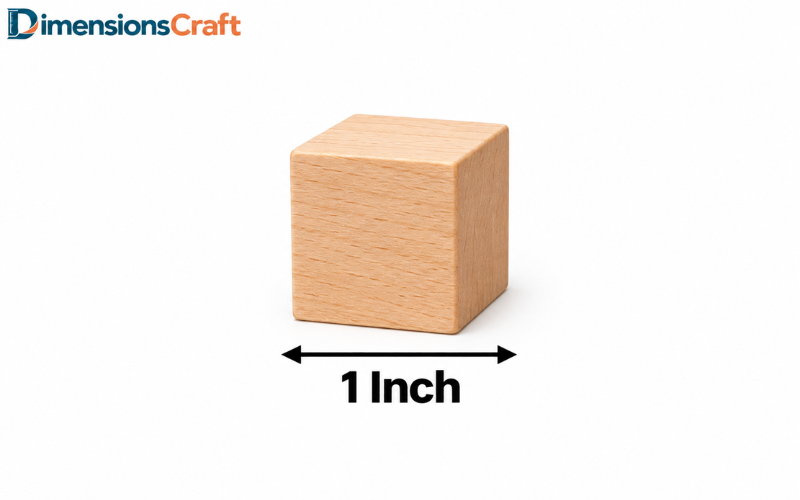
A wooden block with one-inch sides offers a simple way to understand the measurement. Small wooden blocks are used in craft projects, educational activities, model construction, and decorative displays. They may be square blocks or cubes, depending on their design.
If the block is a one-inch cube, each side measures 2.54 centimeters. You can measure its length, width, or height to check the size. Its diagonal will be longer than one inch, so use a straight edge rather than measuring from corner to corner.
Wooden blocks are available in many dimensions, and their surfaces may be unfinished, painted, or sanded. A block sold as one inch may have small manufacturing variations, so check the specifications if you need an exact fit.
To picture the measurement, imagine placing one edge of the block against the zero mark of a ruler. The opposite edge should line up with the one-inch mark. This solid, straight-sided object is particularly helpful because it lets you compare the same measurement along several directions.
7. One-Inch Square Craft Foam
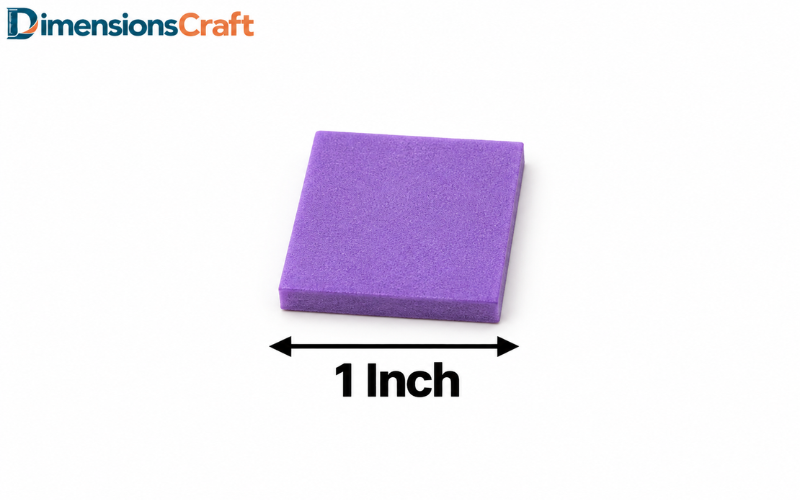
A one-inch square of craft foam is another easy way to visualize a short measurement. Craft foam is commonly used for children’s projects, decorations, school assignments, costume accessories, and small models. It is lightweight and easy to cut into different shapes.
For a one-inch square, each side measures 2.54 centimeters. The square’s length and width are therefore both one inch, although its thickness is a separate and usually much smaller measurement. If you cut the foam yourself, mark the dimensions before cutting to keep the edges as even as possible.
Craft foam is sold in sheets, shapes, and small pieces. Not every foam square is one inch, so check the package or measure the piece rather than estimating from its appearance.
This example is helpful because a square gives you a clear, straight edge to compare with a ruler. You can place one side along the ruler and see the distance from zero to one inch. One-inch foam squares are also useful when a craft project needs small, evenly sized pieces.
8. One-Inch Adhesive Label
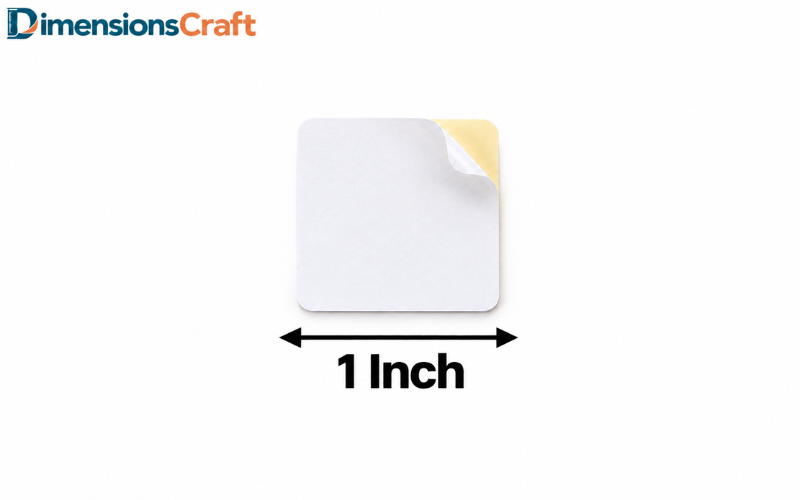
An adhesive label with a one-inch width or side length can provide a practical reference. Small labels are used for organizing storage containers, marking folders, identifying items, and labeling products. They are available in many shapes, including circles, squares, and rectangles.
For a square label measuring one inch on each side, both the length and width equal 2.54 centimeters. A rectangular label may have one side measuring one inch while its other side is longer. Therefore, it is important to identify which dimension is specified.
To picture the size, imagine placing a one-inch square label on a sheet of paper. Its edges would each measure one inch, making it a compact shape that is easy to compare with a ruler. A circular label with a one-inch diameter would also measure one inch across its center.
Labels vary widely in size, so do not assume a small sticker is automatically one inch. Check the package dimensions or measure the label before using it as a reference. This is particularly important when organizing products or printing labels that need to fit a specific space.
9. One-Inch Ribbon
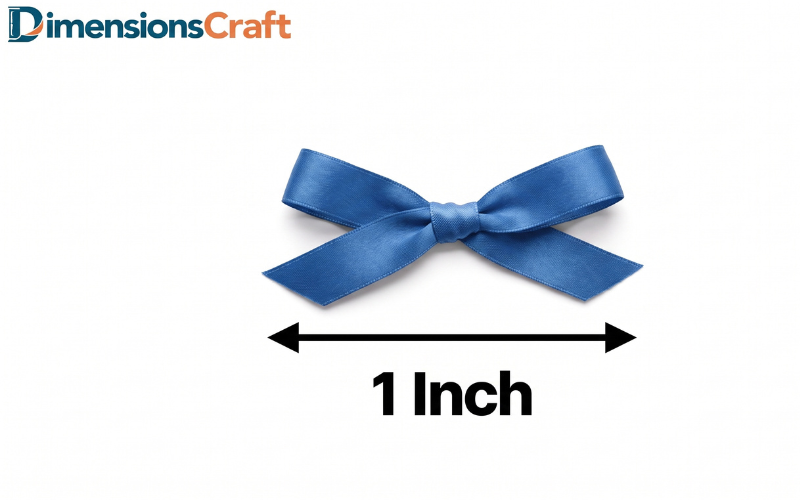
Ribbon that is one inch wide is a useful example of a measurement that describes width rather than length. Ribbons are used for gift wrapping, sewing, decoration, crafts, clothing accessories, and event displays. They are available in many widths, from narrow decorative ribbon to wider fabric ribbon.
If a ribbon is one inch wide, the distance from one long edge to the other is 2.54 centimeters. The ribbon may be several feet long, but its width remains one inch. This distinction is important because the length of the ribbon and the width of the ribbon describe different dimensions.
To visualize the width, lay a piece of ribbon flat on a table and measure straight across it, from one edge to the other. The ruler should show one inch if the ribbon is made to that width.
Ribbon is an especially helpful example because it makes the difference between length and width easy to understand. When buying ribbon for a project, check the listed width and total length. A ribbon may be one inch wide without being only one inch long.
10. Short Pencil Section
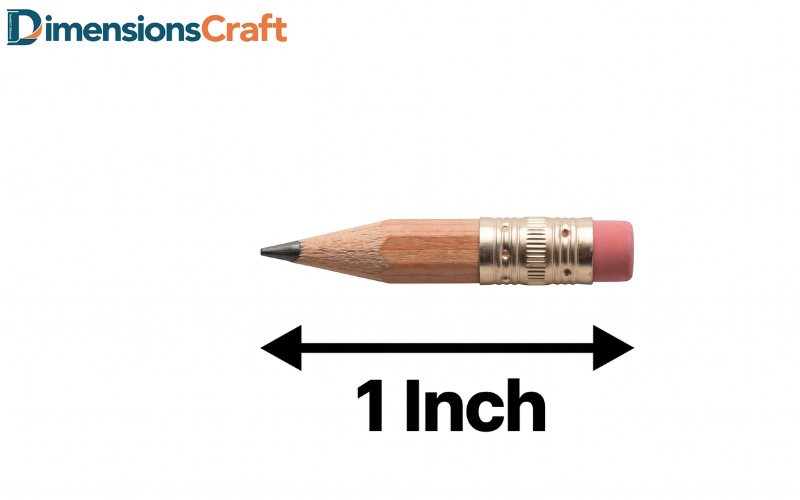
A one-inch section of a pencil is a simple way to visualize this measurement. Most pencils are much longer than one inch, but you can identify or mark a one-inch segment along the pencil’s body. This makes the example useful even when you do not own a specially sized object.
To create the reference, place a ruler alongside the pencil and mark the distance between zero and one inch. That section of the pencil measures exactly one inch, or 2.54 centimeters. You do not need to cut the pencil; a small mark is enough to show the distance.
This example is particularly helpful for schoolwork and drawing because pencils are common and have a straight body that is easy to measure. The diameter of the pencil itself is much smaller than one inch, so be careful to measure along its length rather than across its thickness.
A marked one-inch pencil section can help you compare other short distances. However, if the measurement needs to be accurate, use the ruler to make the mark rather than estimating the section by eye.
11. One-Inch Paper Strip
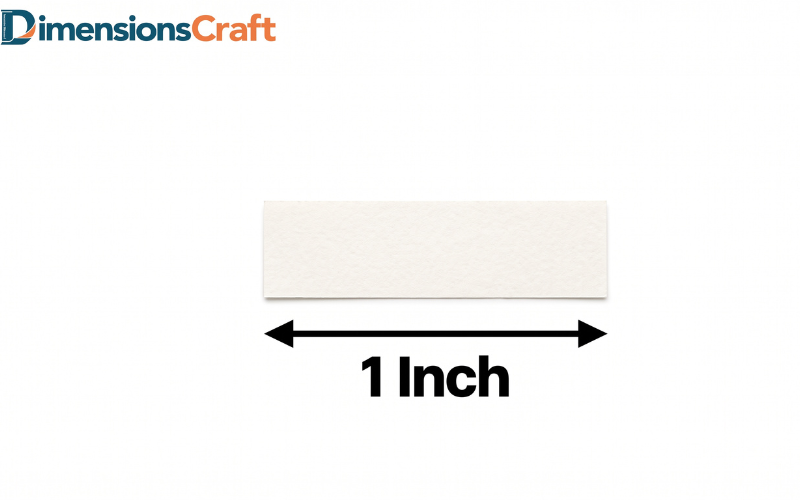
A strip of paper cut to one inch long is a simple and reliable visual reference. You can make one from ordinary printer paper, notebook paper, construction paper, or cardstock. Paper is easy to find at home, school, or work, so this is a useful option when you need a quick measurement guide.
To create the strip, use a ruler to mark a line one inch from the starting edge. Cut along the mark, keeping the strip narrow if you want a simple length reference. The distance from one end to the other should be 2.54 centimeters.
The strip’s width can be any size because the important measurement is its length. For example, a strip could be one inch long and half an inch wide, or one inch long and a quarter-inch wide.
This example is more accurate than relying on an object that is merely close to one inch, provided you measure and cut it carefully. You can also make several strips to compare small objects or use them in school projects. Keep in mind that a paper strip can bend or tear, so handle it carefully if you want to reuse it.
12. One-Inch Washer
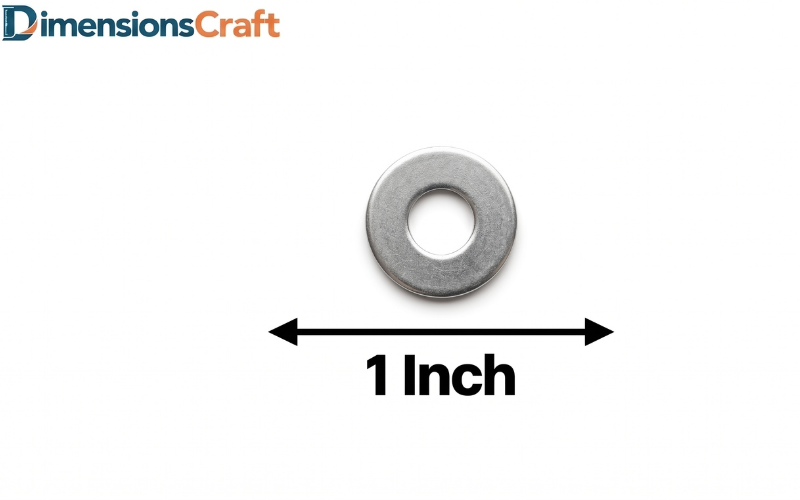
Some washers are manufactured with a specified outside diameter of one inch. Washers are small, flat components with a hole in the center, and they are often used with bolts and screws to distribute pressure or help protect a surface. They are common in hardware stores, toolboxes, and repair kits.
For this example, the relevant measurement is the washer’s outside diameter. A washer with a one-inch outside diameter measures 2.54 centimeters from one outer edge to the opposite edge through its center. The central hole has its own diameter, which is smaller and depends on the washer’s intended fastener.
It is important to check the product specifications because washer sizes can be described using different dimensions or naming systems. A washer intended for a one-inch bolt does not necessarily have a one-inch outside diameter.
To visualize the measurement, place the washer on a ruler and measure across its full outer width. This can help you understand the difference between the outer diameter and the hole in the middle. For repair work, use the specified washer dimensions rather than relying on a rough visual estimate.
13. One-Inch Craft Tile
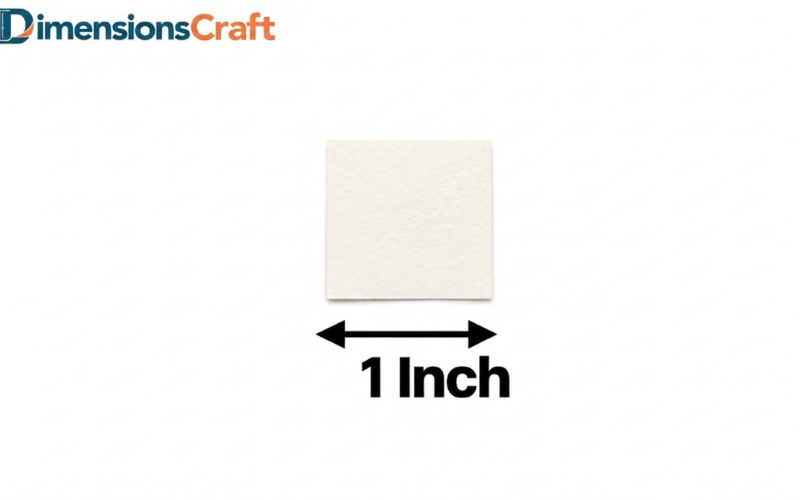
A small craft tile with one-inch sides can help you picture this measurement. Craft tiles may be used for mosaics, miniature decorations, art projects, model surfaces, and other creative activities. They can be made from ceramic, glass, wood, or other materials.
If the tile is square and measures one inch on each side, its length and width are both 2.54 centimeters. The diagonal from one corner to the opposite corner is longer than one inch. Therefore, measure along an edge when checking the size.
Craft tiles are sold in a variety of dimensions, and not every small tile measures exactly one inch. Some products use nominal sizes, so the actual dimensions may differ slightly. Check the manufacturer’s specifications if you are planning a mosaic or pattern that requires consistent spacing.
To visualize the measurement, imagine placing one side of the tile along a ruler. The edge should extend from zero to the one-inch mark. This example is useful for craft planning because small differences in tile dimensions can affect the spacing and alignment of a finished design.
14. One-Inch Plastic Cube
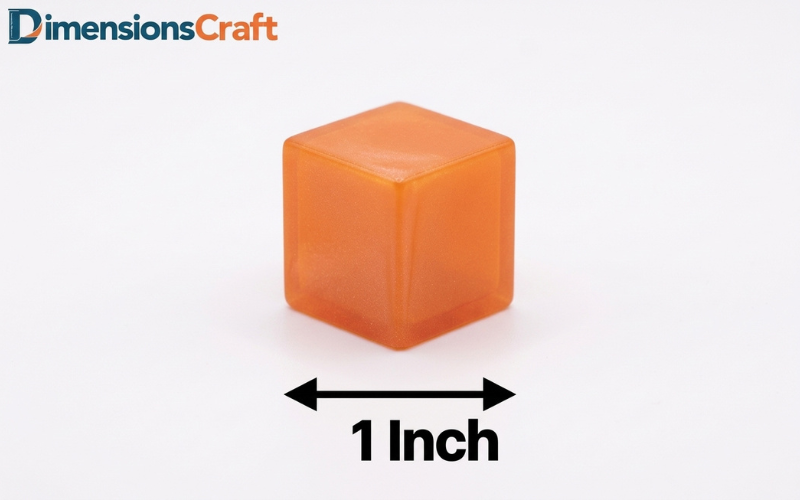
A one-inch plastic cube is another clear reference for understanding this length. Plastic cubes are used for educational activities, counting exercises, building projects, crafts, and small decorative displays. Depending on the product, they may be solid or hollow and can come in many colors.
For a cube with one-inch sides, the length, width, and height each measure 2.54 centimeters. You can measure any straight edge to check the size. The diagonal across one face is longer than one inch, so it is important not to confuse the diagonal with the side length.
To picture the measurement, place one edge of the cube beside a ruler and align one corner with the zero mark. The opposite corner along that edge should reach the one-inch mark. This makes the cube an easy three-dimensional reference for the measurement.
Before using a plastic cube in a school or craft project, check its listed size. Many educational cubes are smaller than one inch, so a cube should only be used as an exact one-inch reference if its dimensions confirm that size.
How to Estimate 1 Inch Without a Ruler
Sometimes you need to estimate one inch when a ruler or tape measure is not nearby. You can use familiar objects as references, but remember that estimates are less reliable than actual measurements.
Use a US Quarter as a Rough Guide
A US quarter measures approximately 0.955 inches across. Since it is slightly smaller than one inch, it can help you visualize a distance close to one inch. Do not treat it as an exact one-inch measuring tool.
Use Your Fingers Carefully
The width of a finger can sometimes help you estimate a short distance, but finger sizes differ from person to person. One person’s finger may be close to one inch wide, while another person’s may be much narrower or wider. If accuracy matters, measure your finger once with a ruler before using it as a personal reference.
Make a Paper Reference
If you can access a ruler even once, mark a one-inch section on a piece of paper or card. You can keep this small reference for later estimates. A carefully measured paper strip is more dependable than guessing the size of an unfamiliar object.
Compare with a Known Measurement
If an object has a verified one-inch dimension, use that particular dimension as a visual guide. For example, a one-inch craft cube has edges that measure one inch. Make sure you compare the same type of measurement: an object’s width should be compared with another width, and a length should be compared with a length.
Where Is a One-Inch Measurement Useful?
Knowing what one inch looks like can help with many everyday tasks. Although it is a short measurement, it is often useful when dealing with small objects and detailed work.
- Craft projects: One-inch squares, strips, labels, and cubes can help you plan decorations and school assignments.
- Sewing: Button diameter, ribbon width, and small fabric details may be measured in inches.
- Home improvement: Small hardware components, washers, and fittings may have dimensions listed in inches.
- Shopping: Product descriptions may list small components, accessories, or display dimensions using inches.
- Drawing and design: One-inch marks can help with layouts, scale drawings, and spacing.
- Education: Comparing inches with centimeters and millimeters helps learners understand different measurement systems.
For every task, check whether the measurement refers to length, width, height, diameter, or thickness. The number alone does not tell you which dimension is being described.
Common Mistakes When Visualizing 1 Inch
Even though one inch is a small measurement, it is easy to estimate incorrectly. Avoiding these common mistakes can help you get more reliable results.
Assuming every small object is one inch: Small objects come in many sizes. A button, paperclip, or craft cube may look close to one inch but could be smaller or larger.
Confusing diameter with circumference: The diameter of a round object is the straight distance across its center. The circumference is the distance around its outer edge. These measurements are not the same.
Measuring from the wrong point on a ruler: Align the starting point with zero, not with the physical edge of the ruler unless that edge is known to align with zero. Some rulers have a small margin before the zero mark.
Confusing centimeters with inches: One inch equals 2.54 centimeters, not one centimeter. The centimeter is a smaller unit, so a measurement of one inch spans more than two and a half centimeters.
Using an approximate reference for a precise job: Coins and fingers are useful for rough estimates, but they are not substitutes for a ruler or caliper when precision is necessary.
FAQs
How many centimeters is 1 inch?
One inch equals exactly 2.54 centimeters. This is the standard conversion used when changing inches to centimeters.
How many millimeters are in 1 inch?
One inch equals exactly 25.4 millimeters. Since one centimeter contains 10 millimeters, 2.54 centimeters equals 25.4 millimeters.
Is a US quarter exactly 1 inch wide?
No. A modern US quarter has a diameter of approximately 0.955 inches. It is close to one inch, making it a useful rough reference, but it is slightly smaller.
Can I use my thumb to measure 1 inch?
You can use your thumb for a rough personal estimate, but thumb widths vary between people. If you need a dependable reference, measure your thumb with a ruler first or use a standard measuring tool.
What everyday objects can measure 1 inch?
A small paperclip may be close to one inch, while items such as a craft cube, button, binder clip, label, ribbon, or tile may be available in a specified one-inch dimension. Always check the exact measurement because sizes vary.
Is 1 inch longer than 1 centimeter?
Yes. One inch equals 2.54 centimeters, so it is more than twice as long as one centimeter.
How can I measure 1 inch accurately?
Use a ruler or measuring tape with inch markings. Align the starting point with zero and measure to the one-inch mark. If you have a metric ruler, measure 2.54 centimeters instead.
Conclusion
One inch is a short but useful measurement equal to 2.54 centimeters or 25.4 millimeters. Familiar objects such as a US quarter, a small paperclip, a one-inch craft cube, a button, or a ribbon with a one-inch width can help you picture the distance. Some are approximate references, while others can be purchased or made to a specified one-inch dimension.
For the best results, pay attention to the part of the object being measured. A button is measured across its diameter, a ribbon is measured across its width, and a craft strip is measured from one end to the other. These differences matter when you are estimating sizes, shopping for supplies, or completing a project.
If accuracy is important, use a ruler or tape measure instead of relying only on visual estimates. Once you become familiar with one inch and its metric equivalent, it becomes easier to understand small measurements in everyday life.