
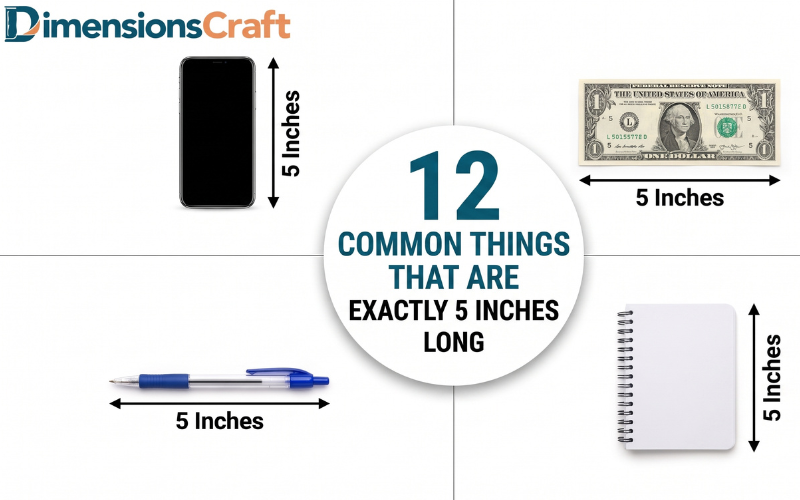
When you need to understand the size of something without measuring it yourself, comparing it with familiar objects can make a big difference. If you have been wondering how long is 5 inches, the answer is 12.7 centimeters, or 127 millimeters. This measurement is long enough to be noticeable but still small enough to fit comfortably in your hand.
Five inches is also a little less than half a foot. You might come across this measurement when shopping for craft supplies, checking the dimensions of household items, working on a DIY project, or deciding whether a particular object will fit in a small space. However, simply knowing the number does not always make the size easy to picture.
In this guide, you will learn how long five inches is, what it looks like in everyday life, and how it compares with common objects. You will also find a conversion chart, practical measuring tips, and 12 specific examples that can help you visualize this length more accurately.
How Long Is 5 Inches?
Five inches is exactly 12.7 centimeters, which is slightly longer than 12 centimeters. In millimeters, it equals 127 mm. If you are using a standard 12-inch ruler, the five-inch mark is located five inches from the zero mark.
A simple way to understand this measurement is to imagine five sections, each measuring one inch, placed end to end. Together, those sections form a straight line that is five inches long.
Five inches is also equal to 5/12 of a foot, or approximately 0.4167 feet. It is not quite half a foot because six inches make half a foot.
The exact size becomes easier to understand when you compare it with an object that has a known measurement. A five-inch craft rod, for example, gives you a straight length to picture, while a square object measuring five inches on each side helps you visualize both its length and width.
Remember that the measurement must refer to the correct dimension. An object described as five inches wide may be much longer, taller, or thicker in another direction. Always check whether the measurement refers to length, width, height, diameter, or diagonal.
What Does 5 Inches Look Like?
Five inches looks like a straight line measuring 12.7 centimeters from one end to the other. If you have a ruler marked in inches, you can see this distance between the zero mark and the five-inch mark.
One useful comparison is a standard 5 × 7-inch photograph. Its shorter side measures five inches, while its longer side measures seven inches. This makes the photograph a helpful way to picture a five-inch edge.
You can also imagine a straight object divided into five equal one-inch sections. Each section adds another inch, so the complete object reaches five inches at the end of the fifth section.
Another option is to use a five-inch piece of wood, plastic rod, or craft material. These objects are especially useful because their length can be checked from one end to the other without confusing it with a diagonal or diameter.
Keep in mind that an object does not need to be five inches in every direction to help you visualize the measurement. A rectangular object may be five inches wide but longer in length, while a round object may have a five-inch diameter. Checking the specific dimension will help you make a more accurate comparison.
Quick Comparison Chart: 5 Inches
The chart below shows five inches alongside familiar measurements and useful size references.
| Measurement or Object | Size |
| Five one-inch sections | 5 inches |
| Centimeters | 12.7 cm |
| Millimeters | 127 mm |
| Feet | 0.4167 ft |
| Half a foot | 6 inches |
| Short side of a 5 × 7-inch photograph | 5 inches |
| Length of a five-inch craft rod | 5 inches |
| Five-inch square | 5 inches on each side |
The photograph and craft rod examples apply when the items are made to the specified dimensions. Product sizes can vary, so check the label or measure the object before using it as an exact reference.
5 Inches Conversion Chart
Inches are commonly used in the United States for many product dimensions, while centimeters and millimeters are widely used in other parts of the world. Converting five inches into different units can make product descriptions, instructions, and measurements easier to understand.
Five inches equals 12.7 centimeters and 127 millimeters. In larger units, it is approximately 0.4167 feet, 0.1389 yards, or 0.127 meters.
| Unit | Equivalent to 5 Inches |
| Inches | 5 in |
| Centimeters | 12.7 cm |
| Millimeters | 127 mm |
| Feet | 0.4167 ft |
| Meters | 0.127 m |
| Yards | 0.1389 yd |
| Kilometers | 0.000127 km |
| Miles | Approximately 0.0000783 mi |
How to Convert 5 Inches Into Other Units
You can convert five inches into other units using a few simple formulas.
Inches to centimeters
Multiply the number of inches by 2.54.
5 × 2.54 = 12.7 cm
Inches to millimeters
Multiply the number of inches by 25.4.
5 × 25.4 = 127 mm
Inches to feet
Divide the number of inches by 12.
5 ÷ 12 = 0.4167 ft
Inches to meters
Multiply the number of inches by 0.0254.
5 × 0.0254 = 0.127 m
These formulas are useful when comparing products, reading international size charts, or following instructions that use a different measurement system.
12 Common Things That Are About 5 Inches Long
Everyday objects can make five inches easier to picture, but their dimensions must be checked carefully. Many products are available in different sizes, so an object’s name alone does not guarantee that it measures exactly five inches.
The examples below focus on specific items that can be selected or made to a five-inch length. For objects sold in multiple sizes, check the manufacturer’s stated dimensions or measure the item before using it as an exact reference.
| No. | Object | How It Measures 5 Inches |
| 1 | Five-Inch Mini Pry Bar | 5 inches from end to end |
| 2 | Five-Inch Precision Screwdriver | 5 inches in overall length |
| 3 | Five-Inch Flat Paint Scraper | 5 inches in overall length |
| 4 | Five-Inch Zipper | 5-inch usable zipper section |
| 5 | Five-Inch Brass Hinge | 5 inches along its longest side |
| 6 | Five-Inch Drill Bit | 5 inches in overall length |
| 7 | Five-Inch Aquarium Air Tubing | 5 inches from end to end |
| 8 | Five-Inch Heat-Shrink Tubing | 5 inches before shrinking |
| 9 | Five-Inch Metal Wire Piece | 5 inches from end to end |
| 10 | Five-Inch Strip of Sheet Metal | 5 inches long |
| 11 | Five-Inch Plant Tie | 5 inches laid flat |
| 12 | Five-Inch Silicone Tubing Section | 5 inches along the tube |
A Five-Inch Mini Pry Bar
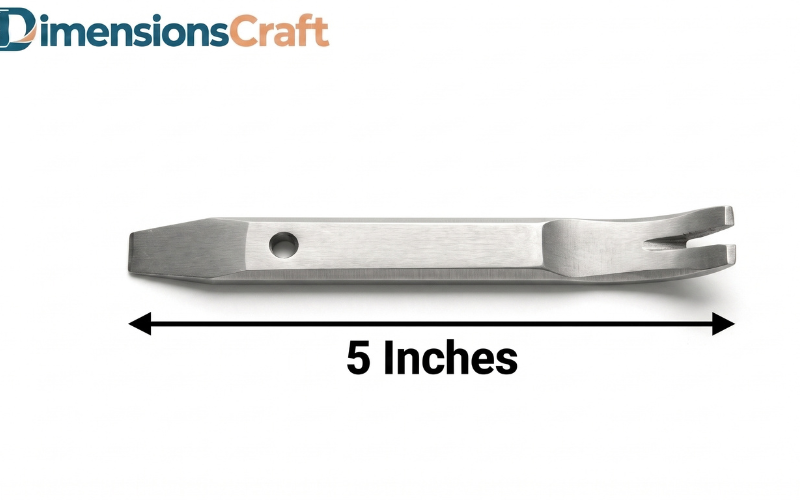
A mini pry bar is a compact hand tool used for lifting, separating, or removing small components. A version with an overall length of five inches provides a clear example of this measurement.
Its length is measured from one end of the tool to the other, including its curved or angled tip. The working ends may have different shapes, but they do not change the overall end-to-end measurement.
Mini pry bars come in various sizes, so not every model is five inches long. Choose a product with a stated five-inch overall length if you want to use it as a reference. Its rigid shape makes the measurement easy to compare against a ruler.
A Five-Inch Precision Screwdriver
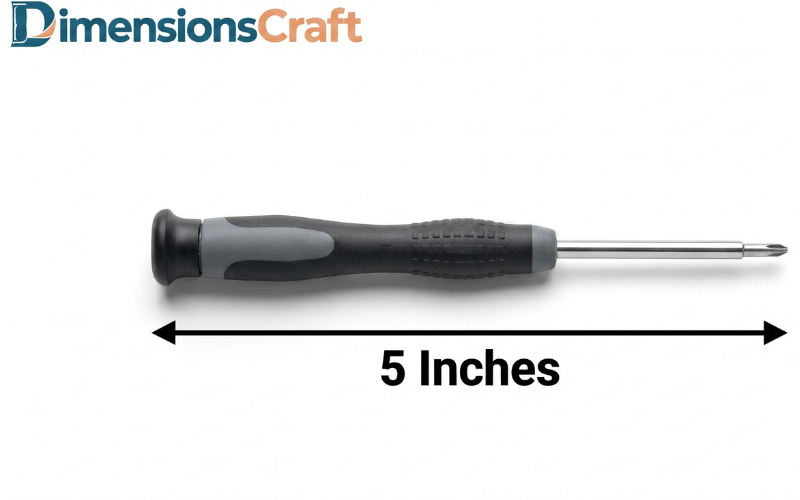
A precision screwdriver is used for small screws in electronics, eyeglasses, watches, toys, and other detailed repair work. Some compact models measure five inches from the tip to the end of the handle.
For this comparison, the measurement refers to the entire tool, not just its metal shaft. A screwdriver with a five-inch shaft may be longer overall once its handle is included.
Because precision screwdrivers come in many designs, check the overall length listed by the manufacturer. A five-inch model gives you a useful reference for understanding the size of a small hand tool.
Related Post: How Long is 1 Inch
A Five-Inch Flat Paint Scraper
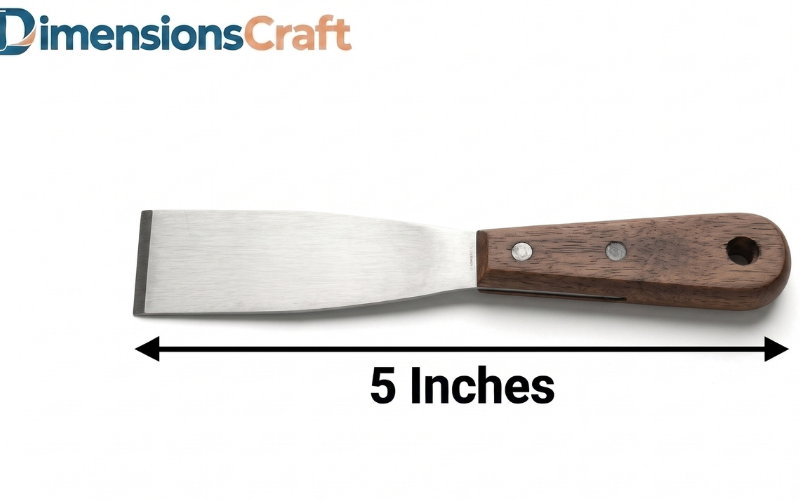
A flat paint scraper is used to remove dried paint, adhesive residue, and other material from suitable surfaces. A compact scraper with a total length of five inches can help illustrate this measurement.
The overall length should be measured from the back of the handle to the farthest end of the blade. The blade itself may be much shorter than five inches, so it is important not to confuse blade width with total tool length.
Scrapers are sold in different sizes and styles. Select one with a verified five-inch overall length before using it as a comparison.
A Five-Inch Zipper
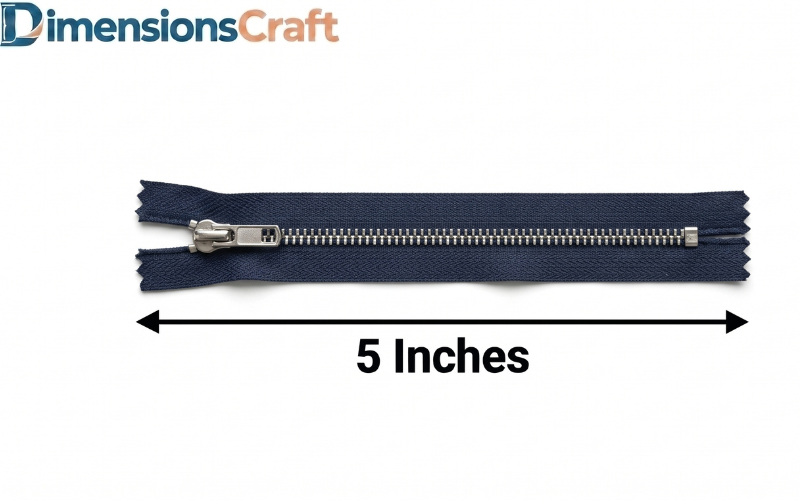
A zipper with a five-inch usable section can be found in certain small pouches, fabric organizers, and sewing projects. Its length is measured along the section that opens and closes, rather than automatically including every bit of extra fabric tape.
This distinction matters because manufacturers may describe zipper size according to the length of the teeth or the usable zipped section. The total sewn component can be slightly longer.
For a reliable five-inch comparison, choose a zipper whose listed usable length is five inches. Lay it flat and measure the specified section from end to end.
A Five-Inch Brass Hinge
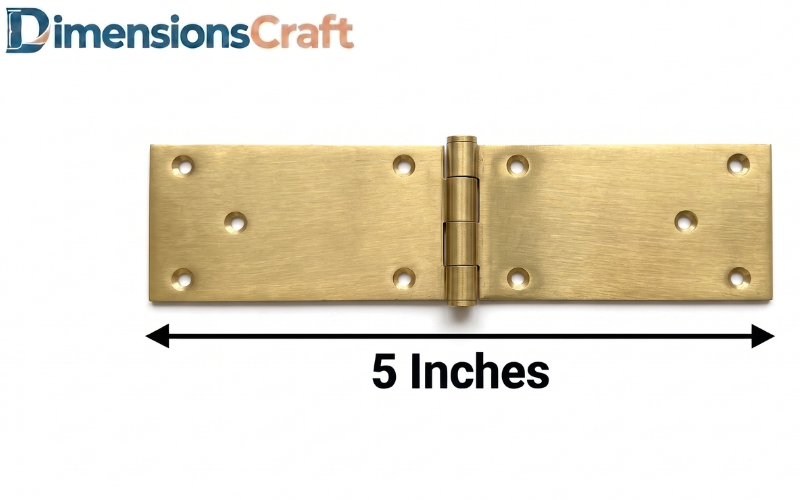
A brass hinge is a metal fitting that allows a door, lid, cabinet, or box to pivot. Some hinges are manufactured with a longest side measuring five inches.
When using a hinge as a size reference, measure along its longest dimension while it is laid flat. Do not confuse the length with the width of the hinge leaves or the size of the pin.
Hinges come in many sizes and designs, so five inches is a product-specific dimension rather than a universal hinge measurement. Check the product specifications to confirm the length.
Related Post: How Long is 2 Inches
A Five-Inch Drill Bit
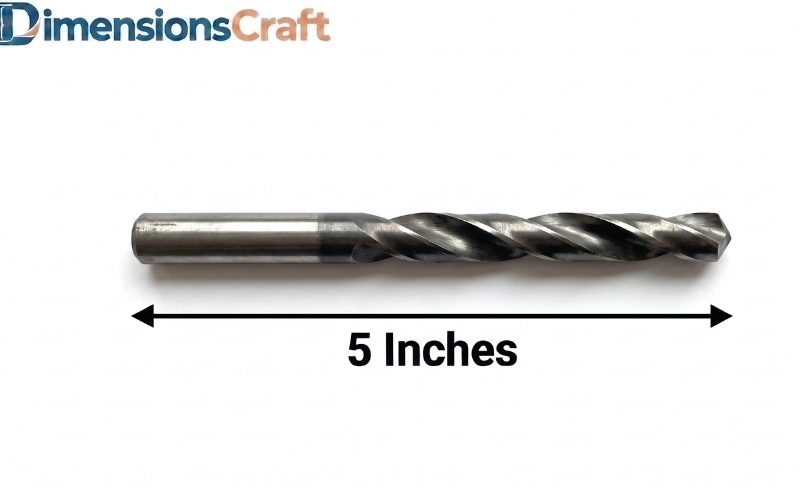
Drill bits are available in different lengths for woodworking, metalworking, masonry, and other tasks. A drill bit with an overall length of five inches gives you a rigid object that is easy to compare with a ruler.
The overall length includes the bit from its tip to the opposite end of its shank. This is different from the cutting depth or working length, which may be shorter.
Not all drill bits measuring five inches overall can drill a five-inch-deep hole. The usable cutting length depends on the bit’s design. If you are using this example to picture five inches, check the overall length specified by the manufacturer.
A Five-Inch Aquarium Air Tubing Section
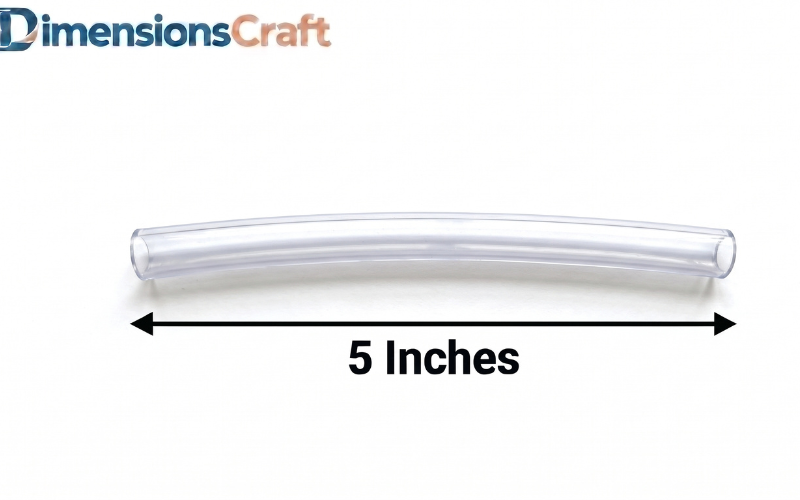
Aquarium air tubing carries air between an air pump and aquarium equipment. A section cut to exactly five inches is a useful example of a flexible object with a clearly defined length.
To measure it, place the tubing straight on a flat surface without stretching it. Measure from one cut end to the other along its length.
Air tubing is often supplied in long coils, so a five-inch section may need to be cut from a longer piece. The tubing’s diameter is a separate measurement and does not affect its five-inch length.
A Five-Inch Heat-Shrink Tubing Section
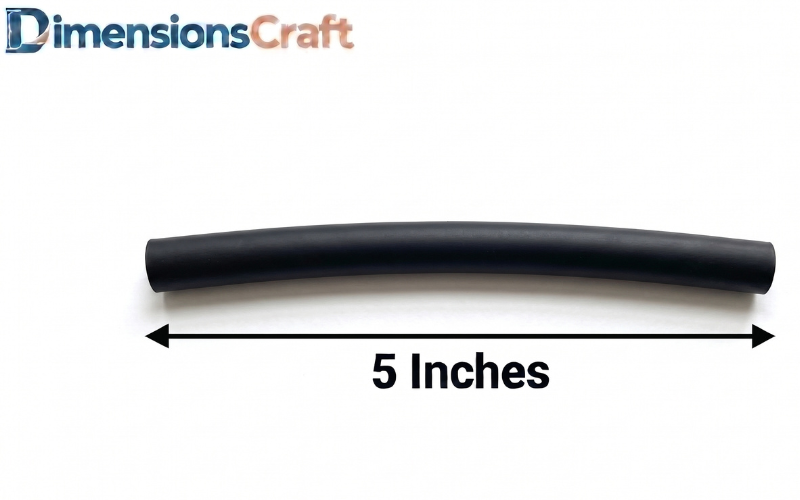
Heat-shrink tubing is used to cover and protect electrical connections when the material is suitable for the intended application. A section cut to five inches before shrinking gives you another example of this measurement.
The tubing should be measured before heat is applied because it contracts when heated. Its diameter also changes during shrinking, but that does not alter the original cut length in the same way.
Heat-shrink tubing is commonly sold in longer lengths or assorted pieces. Measure a section from one end to the other to confirm that it is five inches long.
A Five-Inch Metal Wire Piece
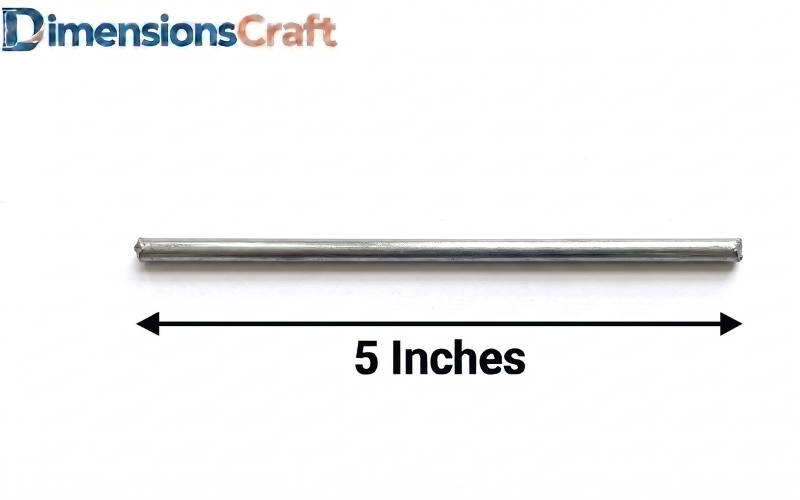
A straight metal wire piece measuring five inches can be used in craft work, small repairs, model building, and other projects. Its rigid or semi-rigid form makes the length easy to see when it is laid beside a ruler.
The measurement runs from one end to the other along the wire. If the wire is bent into a curve, the distance between its endpoints may be shorter than its actual length.
Wire is sold in many gauges and materials, including steel, copper, and aluminum. To use this example accurately, measure a straight five-inch section rather than estimating from a coil.
A Five-Inch Strip of Sheet Metal
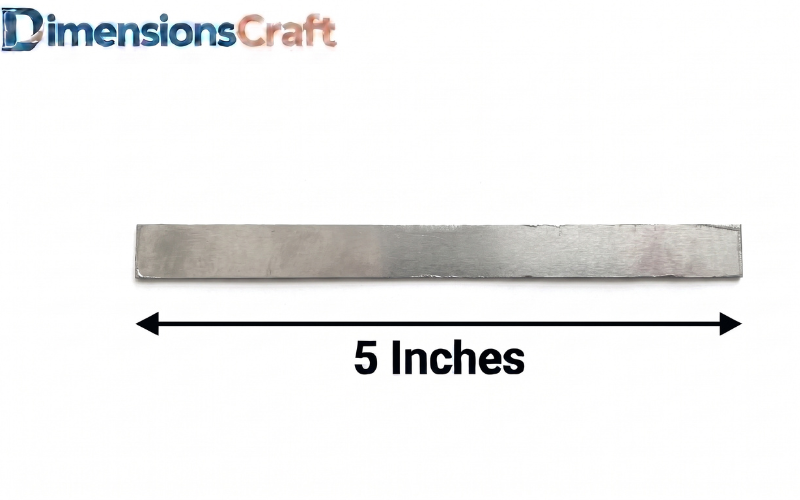
A strip of sheet metal cut to five inches long can provide a precise reference for this measurement. Such strips may be used in suitable workshop projects, repairs, fabrication, or metal craft work.
The five-inch dimension refers to the strip’s length, measured from one cut end to the other. Its width and thickness are separate dimensions and may vary according to the task.
Sheet metal is usually supplied in larger sheets or strips, so the five-inch example may need to be cut to size. Metal edges can be sharp, so use appropriate tools and protection when handling or cutting it.
Related Post: How Long is 3 Inches
A Five-Inch Plant Tie
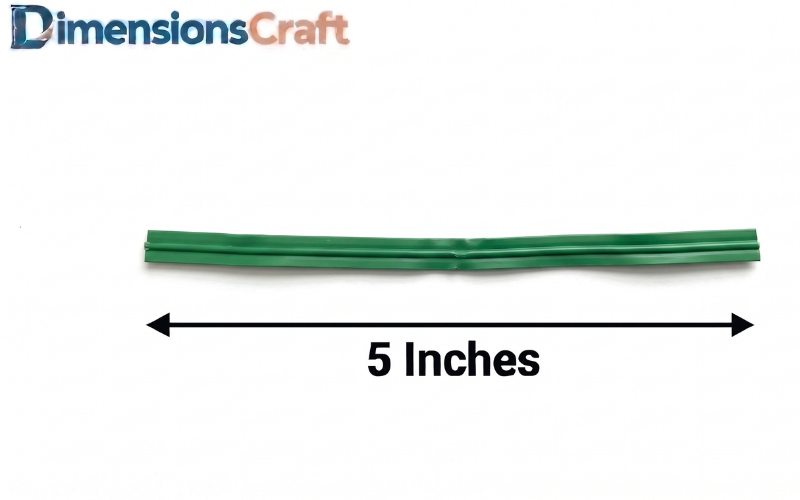
A plant tie is used to secure stems to supports, organize climbing plants, or hold lightweight garden materials in position. A tie cut to five inches long can serve as a flexible example of the measurement.
Lay it flat without stretching it and measure from one end to the other. If the tie is elastic or designed to stretch, its length should be checked in its relaxed state.
Plant ties come in different materials and sizes. A five-inch tie is a specific length, so confirm the package dimensions or measure the piece before using it as an accurate comparison.
A Five-Inch Silicone Tubing Section
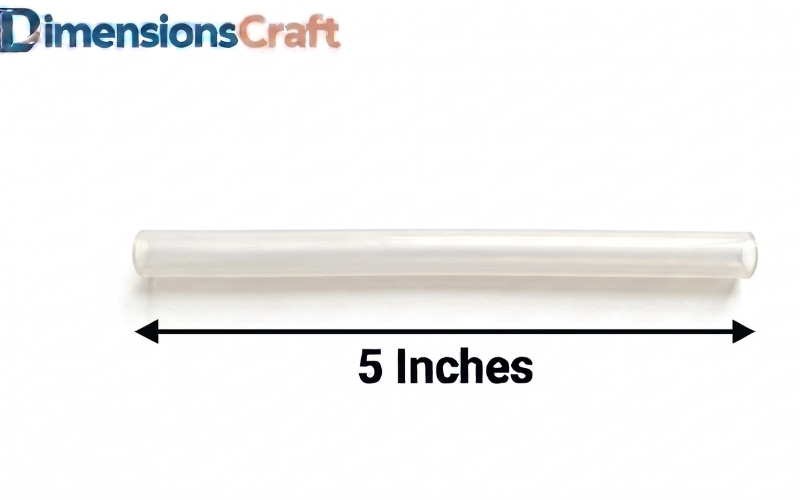
Silicone tubing is flexible and is used in a range of applications, depending on its material grade and intended purpose. A section cut to five inches long offers another way to visualize this measurement.
Place the tube straight on a flat surface and measure from one end to the other along the tubing. If it curves, measuring only the straight-line distance between the endpoints will give a shorter result than the tube’s actual length.
Silicone tubing is available in different diameters and is often sold by the foot or meter. A five-inch section can be cut from a longer piece, provided the tubing is appropriate for its intended use.
How to Estimate 5 Inches Without a Ruler
If you do not have a ruler nearby, several everyday methods can help you estimate five inches. These are useful for rough comparisons, but they should not replace accurate measuring when the dimensions matter.
Use a 5 × 7-Inch Photograph
A photograph in the 5 × 7-inch format has a shorter side measuring five inches. If you have a print of this size, its shorter edge can provide a quick reference. Check that the print is actually five inches wide, since photographs are available in many formats.
Count Five One-Inch Sections
If you have a ruler or measuring tape, count five one-inch sections starting at zero. The distance from the zero mark to the five-inch mark is exactly five inches. This is also a good way to learn how the measurement builds up one inch at a time.
Compare It With a Known-Size Craft Piece
A wooden rod, ribbon strip, or other craft piece that has been measured to five inches can serve as a reusable reference. Make sure the piece is measured accurately before relying on it.
Use Your Hand Only for a Rough Estimate
Your fingers or palm may help you estimate five inches, but hand sizes differ. A hand-based estimate can be useful when no other reference is available, although it is less reliable than an object with known dimensions.
Use a Digital Measuring Tool
Some phone apps can estimate lengths using the device’s camera or other sensors. Their accuracy depends on the phone, software, calibration, and how the measurement is taken. Verify the result against a known-size object before using it for an important task.
Why Knowing the Size of 5 Inches Is Useful
Knowing what five inches looks like can help with everyday decisions. When shopping online, it gives you a better idea of whether a small product will suit your needs. During craft projects, it helps you cut materials to the correct length. At home, it can help you compare dimensions before organizing a drawer, arranging accessories, or fitting an item into a small space.
It is also important to distinguish between length and other dimensions. A product may be five inches wide but much longer from end to end. A round object described as five inches across may refer to its diameter, while a screen may be measured diagonally.
Everyday comparisons are useful for visualization, but the best reference is an item with a verified measurement. When precise fitting, cutting, or installation is involved, use a ruler or tape measure rather than relying on appearance alone.
FAQS
How long is 5 inches in centimeters?
Five inches equals exactly 12.7 centimeters. This makes it slightly longer than 12 centimeters.
How many millimeters are in 5 inches?
Five inches equals 127 millimeters. To convert inches to millimeters, multiply the number of inches by 25.4.
Is 5 inches half a foot?
No. Half a foot is six inches because one foot contains 12 inches. Five inches is one inch shorter than half a foot.
What does 5 inches look like in real life?
Five inches is about 12.7 centimeters long. The shorter side of a 5 × 7-inch photograph or a craft rod cut to five inches can help you picture this measurement.
Can I measure 5 inches without a ruler?
You can estimate five inches by comparing the distance with an object whose dimensions are known, such as a five-inch craft rod or the shorter side of a verified 5 × 7-inch photograph. For an exact result, use a ruler or tape measure.
Is 5 inches longer than 10 centimeters?
Yes. Five inches equals 12.7 centimeters, making it 2.7 centimeters longer than 10 centimeters.
How many feet are in 5 inches?
Five inches equals approximately 0.4167 feet. Divide five by 12 to convert inches into feet.
Are all small objects suitable for estimating 5 inches?
No. Objects that look similar can have different dimensions, and their length may not be the dimension shown in a product listing. Choose an item with a verified measurement or measure it before using it as a reference.
Related Post: How Long is 4 Inches
Conclusion
Five inches equals 12.7 centimeters, 127 millimeters, and approximately 0.4167 feet. It is shorter than half a foot but long enough to be easy to recognize when compared with a five-inch mini pry bar, a measured metal wire piece, or a five-inch section of tubing.
The most important thing is to check the actual dimension you are comparing. Some objects are sold in specific lengths, while others need to be measured or cut to five inches. Everyday examples can help you visualize the size, but a ruler or tape measure remains the best choice whenever accuracy matters.